Build the team behind the tools with DEXOps
A Formula-1 pit crew changes four tires and refuels a car in less than two seconds, and this is not because of one or two brilliant mechanics or world class equipment. It is because of these specific eighteen people, each with one job, moving in a rehearsed sequence that they've run a thousand times.
Now think about the average corporate IT team.
A laptop's battery is dying.
Its disk is nearly full.
It hasn't restarted in three weeks. The signals are all there, but nobody's watching them. No one owns the next step, and the employee won't file a ticket until their laptop actually dies; usually on a Monday, usually before an important meeting on MS Teams.
Great employee experience isn't a tool problem: it's an operating model problem.
This is the gap that digital employee experience operations (DEXOps) is meant to close.
Leveraging employee insights for measurable impact
Most organizations think they've solved digital employee experience if they've bought a monitoring or telemetry capturing tool. But a sensor only tells you something is wrong — it doesn't decide what to do, who does it or how fast.
We learned this the hard way — by testing it on ourselves first. Here’s what we learnt.
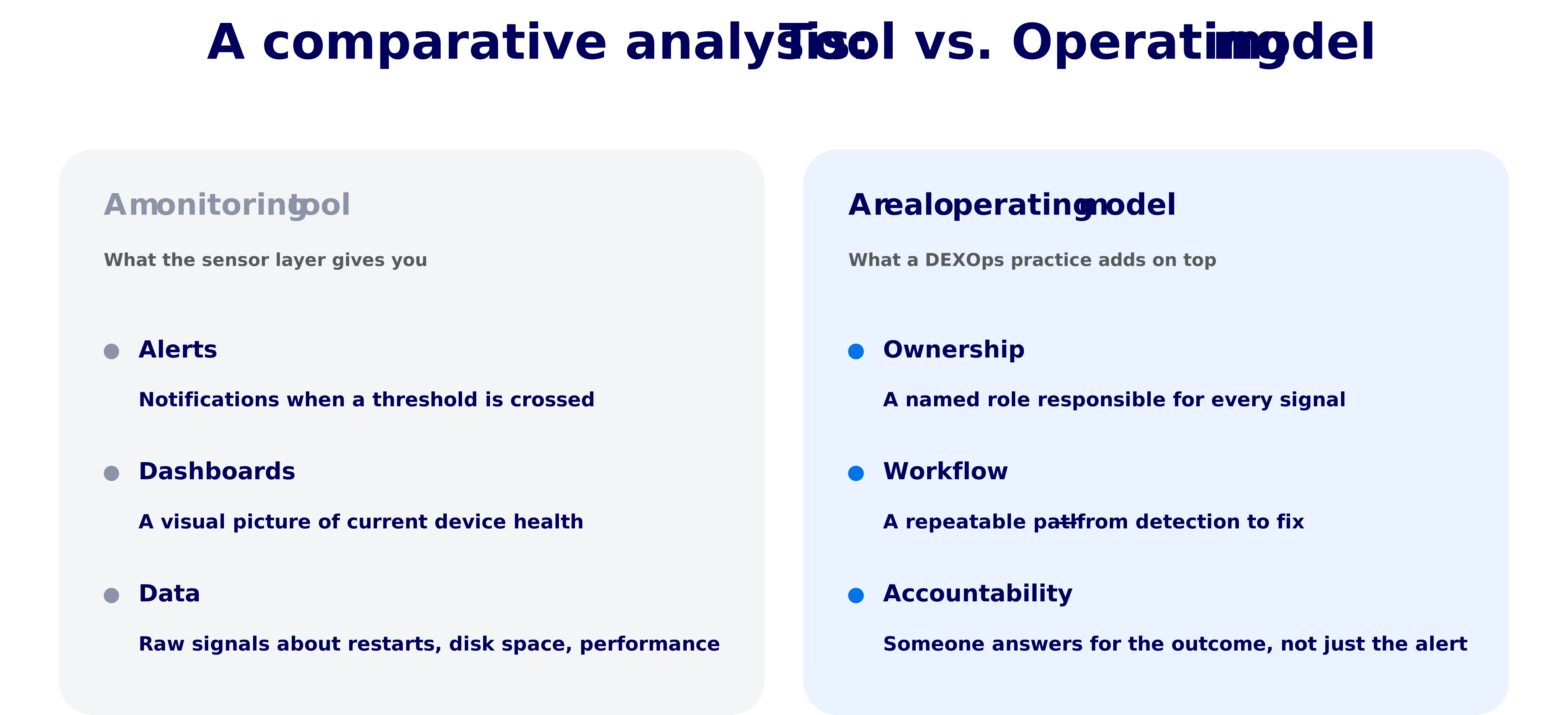
If DevOps taught engineering teams how to run software as a living system instead of a one-off project, DEXOps does the same for the devices, apps and everyday friction that employees deal with. It's not a dashboard. It's a discipline with a team, a rhythm and a set of habits behind it.
Building the DEXOps pit crew with 4 key drivers
A real DEXOps practice needs four things in place before it can work at scale:
- A baseline: Measure what matters to improve what counts.You can't improve what you haven't measured. Before touching anything, define your benchmarks. What does "good" look like? Define metrics like device health, restart frequency or application performance, and measure where you actually stand today.
- A structured team: Clear ownership drives faster results.One overworked engineer chasing tickets isn't an operating model. You need tiered ownership: one person watching signals continuously, another who digs into root cause, and a third who is accountable for not just the fix but the outcome as well.
- A closed loop, running continuously: Use insights for continuous improvement.Detect an issue. Investigate it. Act on it. Report what changed. Repeat. The loop only works if it never stops.
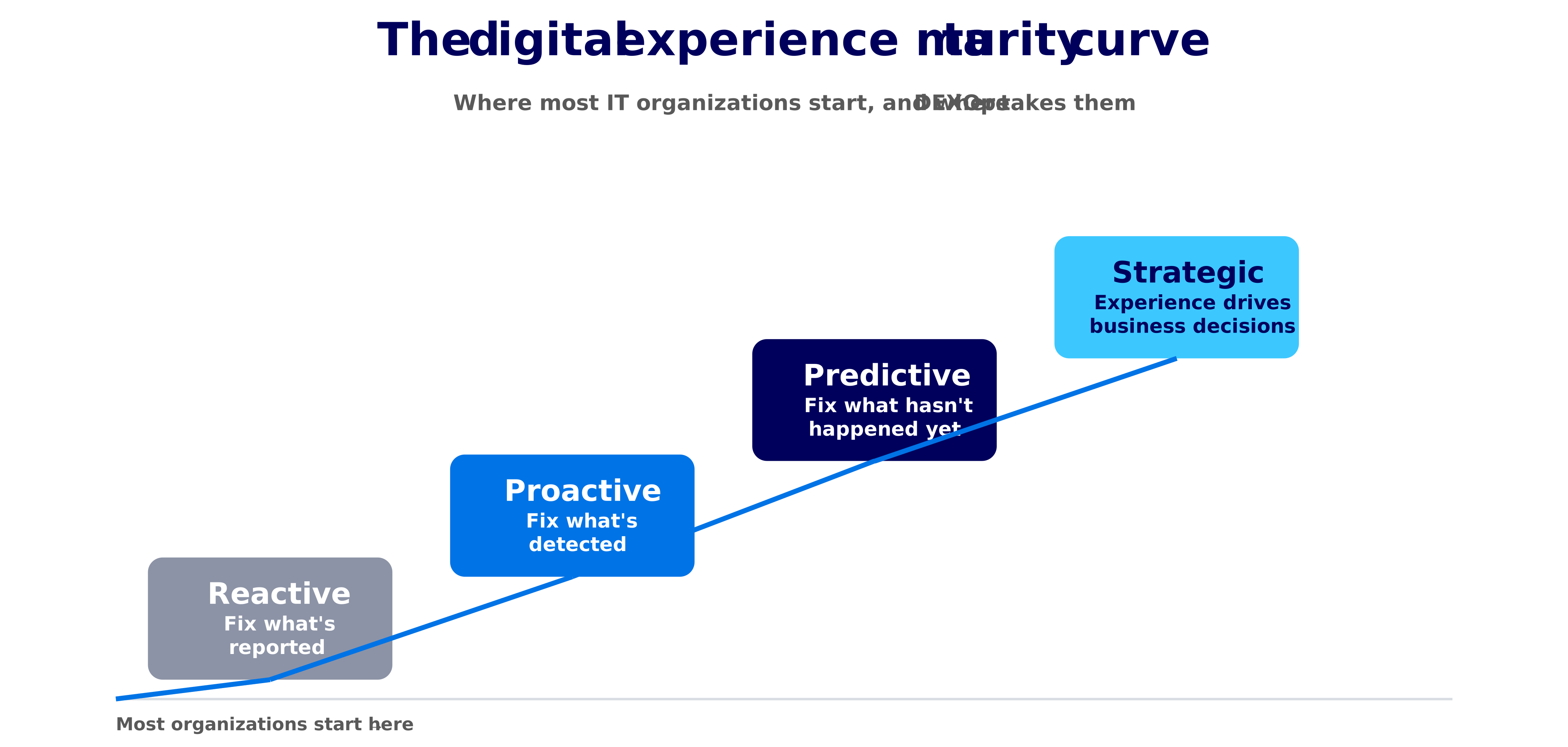
- A maturity path: Move from reactive fixes to a proactive predictive mode.Most IT organizations start off in a reactive mode, fixing what is reported. The goal is to become proactive by fixing what's detected before it's reported. Only a few reach predictive, fixing what hasn't happened yet.
The competitive advantage: Discipline
Here's what's easy to miss: none of these four building blocks are technically hard.
Baselining is spreadsheet work. Tiered ownership is an organizational chart decision. A closed loop is a weekly rhythm, not an engineering project. But here’s the hard part: discipline. Doing it every week, for every device, without a hero stepping in to save the day is the toughest part of this model.
That's exactly why very few organizations get here.
Success does not depend on the budgets or the tools available. It depends on the unglamorous work of building a team that shows up the same way, every single day, whether or not anything's on fire.
This is the gap that digital employee experience operations (DEXOps) is meant to close.
Leveraging employee insights for measurable impact
Most organizations think they've solved digital employee experience if they've bought a monitoring or telemetry capturing tool. But a sensor only tells you something is wrong — it doesn't decide what to do, who does it or how fast.
We learned this the hard way — by testing it on ourselves first. Here’s what we learnt.
If DevOps taught engineering teams how to run software as a living system instead of a one-off project, DEXOps does the same for the devices, apps and everyday friction that employees deal with. It's not a dashboard. It's a discipline with a team, a rhythm and a set of habits behind it.
Building the DEXOps pit crew with 4 key drivers
A real DEXOps practice needs four things in place before it can work at scale:
- A baseline: Measure what matters to improve what countsYou can't improve what you haven't measured. Before touching anything, define your benchmarks. What does "good" look like? Define metrics like device health, restart frequency or application performance, and measure where you actually stand today.
- A structured team: Clear ownership drives faster results One overworked engineer chasing tickets isn't an operating model. You need tiered ownership: one person watching signals continuously, another who digs into root cause, and a third who is accountable for not just the fix but the outcome as well.
- A closed loop, running continuously: Use insights for continuous improvementDetect an issue. Investigate it. Act on it. Report what changed. Repeat. The loop only works if it never stops.
- A maturity path: Move from reactive fixes to a proactive predictive mode. Most IT organizations start off in a reactive mode, fixing what is reported. The goal is to become proactive by fixing what's detected before it's reported. Only a few reach predictive, fixing what hasn't happened yet.
 The competitive advantage: Discipline
Here's what's easy to miss: none of these four building blocks are technically hard.
Baselining is spreadsheet work. Tiered ownership is an organizational chart decision. A closed loop is a weekly rhythm, not an engineering project. But here’s the hard part: discipline. Doing it every week, for every device, without a hero stepping in to save the day is the toughest part of this model.
That's exactly why very few organizations get here.
None of this came from the tool alone. It came from a team that had a defined job to do with what the tool showed them.
Putting this into practice – Client Zero
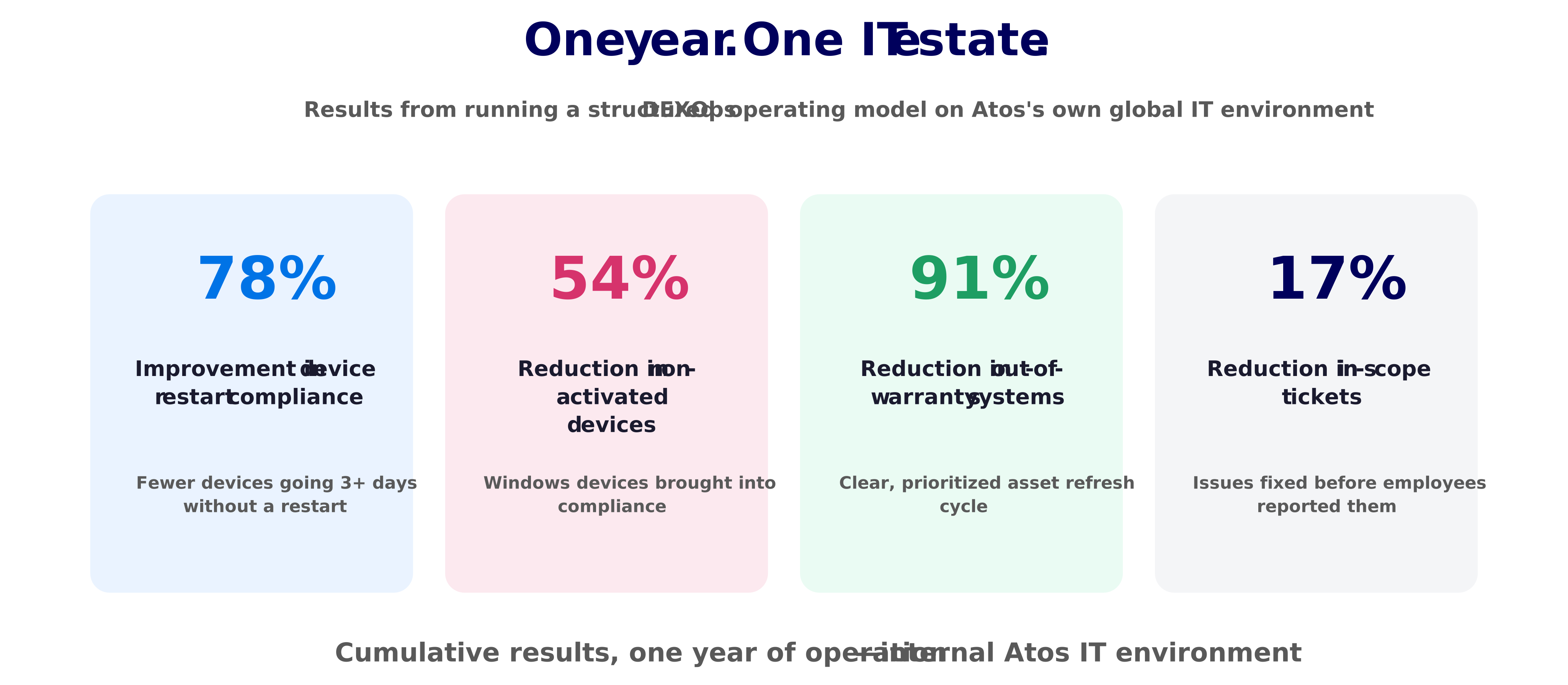
We ran this exact operating model on Atos’s own global IT estate that supports more than 60,000 of our own employees. Leveraging Nexthink as the sensor layer feeding the team's decisions was a game-changer. This was deployed in our very own environment, at our own risk. One year in, the numbers were hard to argue with. Devices that hadn't restarted in over seven days dropped by 78%. Non-activated Windows devices fell by 54%. Systems flagged as out of warranty (quietly creating risk nobody had visibility into) dropped by 91%, giving the team a clear, prioritized refresh cycle instead of guesswork. Tickets for issues related to soft break-fix scope fell by 17%, simply by fixing things before employees felt the need to report them.
The way ahead: A digital workplace that gets better everyday
The organizations getting real value from digital experience data aren't the ones with the most dashboards. They're the ones who built a pit crew around them with clear roles, a closed loop and the discipline to run it long after the initial excitement of a new tool wears off.
That discipline is what DEXOps actually is. Everything else is just telemetry.