Intelligent Infrastructure: How AI is Enhancing Terraform Automation
In today’s fast-moving cloud landscape, organizations are rethinking how they build and manage infrastructure. Infrastructure-as-Code (IaC) frameworks like HashiCorp’s Terraform have become central to this shift, replacing manual provisioning with automated, version-controlled deployments.
Terraform treats infrastructure as a single source of truth, tracking resources through state management, modules, plugins, and the plan → right until the apply workflow. Add policy checks for governance, cost, and security, and you get a foundation for reliable, scalable cloud operations.
Yet complexity remains. Teams juggle multiple interfaces — consoles, CLIs, and SDKs — which increases the risk of drift, misconfiguration, and compliance gaps. Linting, drift detection, and policy checking help mitigate these risks, — and AI is transforming how these practices are executed.
By adding intelligence to IaC workflows, AI predicts configuration issues, detects anomalies, and enforces policies in real time, turning Terraform into a smarter, adaptive tool for cloud management.
AI-Assisted IaC: Beyond Automation
By adding context, prediction, and learning into workflows, Terraform evolves from a static tool into a dynamic, adaptive system. It helps teams anticipate problems, optimize configurations, and enforce best practices consistently. Let’s explore how AI-assisted IaC goes beyond mere automation to create better aligned, seamless end-to-end processes.
Linting: From Rules to Reasoning
Traditional linting ensures consistency by checking syntax, naming conventions, or deprecated attributes. AI-assisted linting goes further.
It understands intent, evaluates efficiency and modularity, and applies provider-specific best practices.
There are security benefits too. AI can flag misconfigured permissions or open ports before they reach production. Feedback is informative, explaining why a suggestion was made, helping developers learn while they code.
Policy Checking: From Compliance to Intelligence
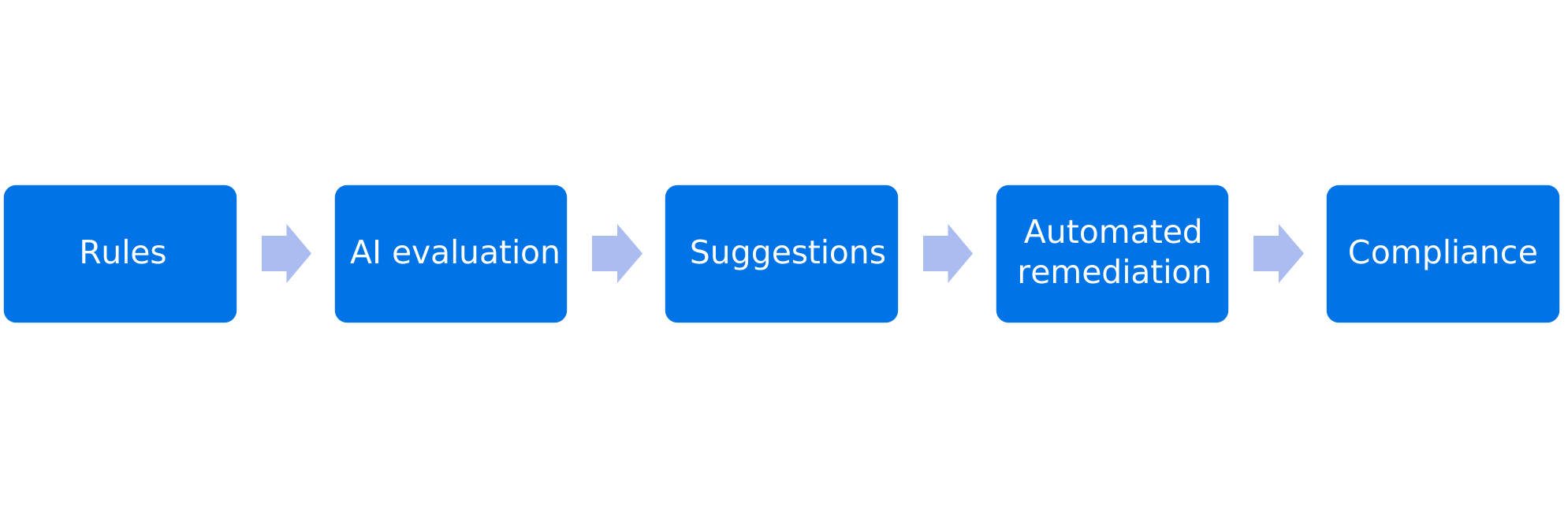
Policy checking ensures Terraform deployments meet governance, encryption, and cost-tagging requirements. Further, AI adds foresight, i.e. instead of reacting to violations, it predicts them, suggests remediations, and learns from past patterns. This makes policy enforcement smarter, adaptive, and continuously improving.
Drift Detection: From Awareness to Action
Even disciplined teams face infrastructure drift — manual changes, version mismatches, or Terraform state misalignments. Traditional tools highlight the “what”; AI reveals the “why.”
It identifies at-risk resources, explains changes in plain language, suggests fixes, and can even automate remediation. Over time, AI recommends tagging, policies, or lifecycle rules to prevent future drift. By correlating drift with cost, security, or performance, it turns monitoring into a strategic insight.
Current AI Tools and Terraform Integrations
AI-Driven Policy Checking and Drift Detection
AI-powered tools like Firefly, PolicyCortex, Terramate, and Terracotta AI detect mismatches, enforce policy-as-code, suggest fixes, reinitialize Terraform, and even generate pull requests. By combining linting, drift detection, and compliance monitoring, these tools help teams maintain secure, consistent, and predictable infrastructure.
Like all AI-powered tools, we need to be wary of the challenges that may arise too. Terraform modules can fall behind Git versions or violate policy rules.
Instead, AI can review Terraform code for style, efficiency, linting issues, and policy compliance. Terracotta AI, used by SupportLogic, provides context-aware suggestions, helping teams enforce best practices, identify misconfigurations, and onboard new developers faster.
Leveraging AI in Terraform
AI-assisted Terraform workflows enhance linting, enforce policy-as-code, and make drift detection proactive and actionable. By adding predictive and learning capabilities, AI can detect potential misconfigurations before they occur, enforce policies in real time, and provide actionable insights to developers and operations teams.
Tools like Terramate and Terracotta AI have been available for just over 1 year, showing that AI-driven infrastructure automation is a new frontier. Early adopters gain a head start in streamlining workflows, maintaining compliance, and optimizing costs.
While sectors with strict regulatory or security requirements—, such as governments,— may face slower adoption, these innovations make Terraform safer, faster, and smarter, helping teams confidently manage complex Azure environments.
Atos continues to strengthen its Infrastructure as Code and automation capabilities as part of its managed data engineering services, supporting the development of scalable foundations for GenAI-ready platforms. These recent developments highlight Atos’s broader focus on modernizing infrastructure and data platforms through automation and engineering best practices.
As a leading engineer with vast experience in government-related projects, I can attest that while AI-assisted tools are promising, adoption in highly regulated environments is often limited due to compliance constraints, even though the technology itself offers clear efficiency and governance benefits.
Yet, organizations should try to get ahead and embrace AI-assisted Infrastructure-as-Code before the competition does.
>> If you are looking to discuss opportunities with AI-assisted IaC in your organization, do connect with me.
>> Learn more about how Atos is breaking frontiers with AI-assisted technology and IaC: Cloud and Modern Infrastructure - Atos
Posted 05/02/26



Dive Deeper